Southern Seas

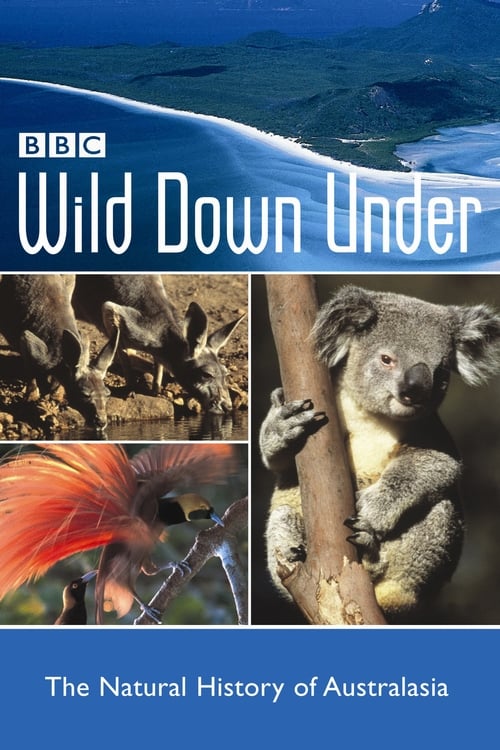
Wild Down Under poster
Wild Down Under
26th September 2003 50 mins Season 1 Episode 3

The third instalment features the wildlife of Australasia's seas and coasts. On Western Australia's desert coastline, seas are lifeless apart from a few fertile pockets. Whale sharks feed close to shore at Ningaloo Reef. At Shark Bay, sharks and dogtooth tuna pin a sardine shoal to the shore, filmed from the air and underwater. A pair of Bryde's whales joins the feeding frenzy. Shallow, sandy bays are ideal conditions for seagrass, browsed by dugongs. In north Australia, monsoon rains flush rich sediment into the ocean. At low tide, golden ghost crabs and mudskippers emerge to feed on the exposed worms, snails and shellfish. The Leeuwin Current brings warm water to the south coast. Australian sea lions and southern right whales raise their young in the impoverished waters of the Great Australian Bight, while giant cuttlefish gather in the breeding season. The cold Southern Ocean skirts Australia's remote south west tip, where the seas are home to giant kelp forests and strange creatures. The leafy sea dragon is camouflaged as seaweed, while the handfish uses its fins to walk across the seabed. At night, female lobsters climb to high points on the reef to release their brood of larvae. In New Zealand's cold and nutrient-rich waters, gannets are filmed plunge-diving into a sardine shoal, which also attracts common dolphins. Hector's dolphins stay close to shore to avoid sharks. Snares Islands penguins must negotiate a steep granite rockface and patrolling Hooker's sealions to reach their nest burrows.

View season
Up next

Next Episode

View season
Gum Tree Country still
Season 1 · Episode 4

Gum Tree Country

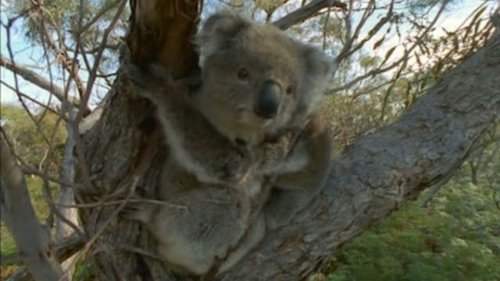
Australia's eucalypt forests are the subject of the fourth programme. In the tropical north, male frilled lizards fight over territory, but retreat to the trees as a kite passes overhead. Gang-gang cockatoos stay above the snowline of the southern mountains to feed on the seed capsules of snow gums. On the misty lower slopes, better soils enable the mountain ash to reach 100 metres, the tallest hardwood in the world. Animals of these forests include superb lyrebirds, Leadbeater's possums and mountain brushtail possums. Some gum trees survive in the arid conditions of the interior; the ghost gum even clings to rocky gorges. The eucalypts provide essential resources for wildlife. Their flowers attract nectar feeders such as lorikeets, honeyeaters and flying foxes, which also act as pollinators. The koala has a special digestive system which enables it to stomach the toxic leaves. Yellow-bellied gliders are shown licking sap and sailing between trees, while termites attack the trees themselves. Gum trees are highly flammable and are adapted to cope with bushfires: fresh shoots grow from buds protected by the insulating bark within weeks of a blaze. Regent parrots nest deep inside the river red gums along the Murray River to avoid predatory lace monitors. The boughs can drop without warning, and those that fall into the river provide shelter for Murray cod. The final scenes show red kangaroos bounding through a flooded forest – without periodic floods, the trees would not survive.

Episode details

Details