The Human Factor

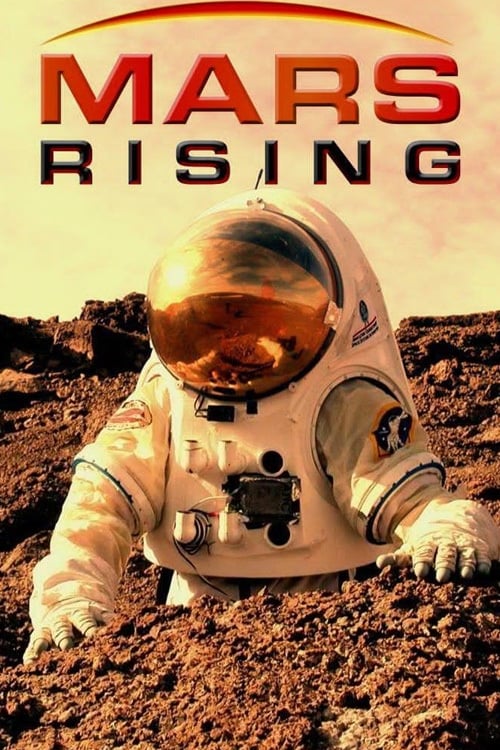
Mars Rising poster
Mars Rising
14th October 2007 2 hours Season 1 Episode 4

The greatest test of the human mind will be the projected almost three-year manned mission to Mars and back. Mental breakdown, sexual tension, near-suicide and mutiny have already taken place on shorter Earth orbit and space travel missions. The Achilles’ heel of the Mars mission may be the human factor. Crew selection is perhaps the most critical of choices. At the start of space exploration, NASA selected military test pilots for missions – in the 1960s, one died per week. In the 1980s, scientists and schoolteachers were chosen to orbit Earth. Today, psychiatrists delve into the human psyche to discover the necessary attributes for a successful 21st century astronaut. The Russians have the most experience in long missions. They test candidates by keeping them isolated and awake for days of non-stop repetitive tasks to duplicate the numbing mindless routine of months of space travel. Life onboard will be crowded, noisy and dirty. There will be no water for showering and astronauts will drink their own purified urine. Noise, workload and disrupted circadian rhythms all cause sleep deprivation. Boring and repetitive food saps psychological and physical energy. What’s NASA cooking up for its crews? Sex in space is a possibility with a mixed crew in close quarters. NASA says that is OK and natural, but different nationalities and customs may give rise to misunderstanding and friction. Isolation and confinement can bring out strong emotions, even violence. Sedation and restraint could be necessary. Family problems on Earth could affect an astronaut’s ability to function. New methods of psychological assessment such as software that examines facial movements for signs of emotional disturbance are being tested. Six months of boredom while travelling through space will be followed by six minutes of an astronaut’s life’s most intense activity and terror during the dangerous descent through Mars’ atmosphere. Training a crew to cope with the psychological pressure of his/her imminent death is a major hurdle. Four personality types have been identified as the most perfect for a Mars mission: the driver, the analyst, the motivator and the relationship builder. Thus far, there has only been a 50 per cent success rate for landing un-manned spacecraft on Mars. Landing a manned craft is even more dangerous. The crew must face that grim reality.

View season
Up next

Next Episode

View season
Six Minutes of Terror still
Season 1 · Episode 5

Six Minutes of Terror

The most perilous part of the journey to the Red Planet is the six minutes it will take to travel from the top of the Mars atmosphere to its surface – the six minutes of terror. Landing on Mars is a complex three-step process: entry, descent and landing. Entry into Mars’ atmosphere begins 125 kms above the surface and lasts about two minutes, with the spacecraft hurtling towards Mars at about 16,000 kms an hour. Only a specially designed inflatable aeroshell outside the Mars Lander will protect the capsule and its occupants from a friction created temperature of 4,000 Celsius. The heat shield must also act as a brake. NASA Chief Engineer Rob Manning explains the particular problem of Mars – it does not have enough atmosphere for a spaceship to emulate a landing on Earth – and yet it has too much atmosphere to simulate a moon landing. Within the first two minutes of descent, the heat shield will reduce the craft’s kinetic energy by 90 per cent, and, typically, a parachute system is deployed to further decrease speed. But recent test results have not been good and designer Leonid Gorshkov at Russia’s Energia Space Corporation has decided parachutes are too risky. The Russians are experimenting with descent engines. At the final stage, the astronauts have about 90 seconds to find a landing site that is not only safe but has, or has had, water. Only on such a site can past or present life forms be discovered. In 2005, NASA’s Mars Reconnaissance Orbiter took high-resolution images of the planet to help locate future landing sites. Bob Richards of Optech Industries in Toronto is testing a new generation guidance system, Lidar, which will help the Mars Lander spot obstacles within seconds with a colour-coding radar-like system. Most space agencies plan to send a 40-ton Habitat to Mars ahead of the crew. The astronauts must land close to that advance module, their supply base for 18 months. If they fail to do so, they will die. Filmmaker James Cameron offers an interesting solution. Every time an astronaut steps out of the Habitat, only their spacesuits will protect them from Mars’ hostile environment. A current prototype flexible suit has 20,000 parts, costs $10- million dollars and weighs 95 kilos – too heavy a load. It must protect the astronauts from organ-damaging radiation, penetrating fine dust, dangerous electrical storms and the carbon dioxide of the Mars atmosphere. It is only after the crew are safely on the planet’s surface that the real purpose of the mission can begin – the search for life on Mars

Episode details

Details