Six Minutes of Terror
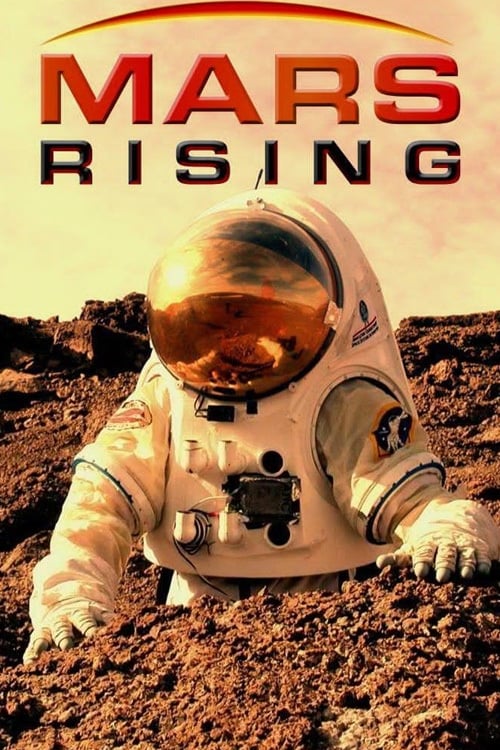
Mars Rising poster
Mars Rising
21st October 2007 2 hours Season 1 Episode 5

The most perilous part of the journey to the Red Planet is the six minutes it will take to travel from the top of the Mars atmosphere to its surface – the six minutes of terror. Landing on Mars is a complex three-step process: entry, descent and landing. Entry into Mars’ atmosphere begins 125 kms above the surface and lasts about two minutes, with the spacecraft hurtling towards Mars at about 16,000 kms an hour. Only a specially designed inflatable aeroshell outside the Mars Lander will protect the capsule and its occupants from a friction created temperature of 4,000 Celsius. The heat shield must also act as a brake. NASA Chief Engineer Rob Manning explains the particular problem of Mars – it does not have enough atmosphere for a spaceship to emulate a landing on Earth – and yet it has too much atmosphere to simulate a moon landing. Within the first two minutes of descent, the heat shield will reduce the craft’s kinetic energy by 90 per cent, and, typically, a parachute system is deployed to further decrease speed. But recent test results have not been good and designer Leonid Gorshkov at Russia’s Energia Space Corporation has decided parachutes are too risky. The Russians are experimenting with descent engines. At the final stage, the astronauts have about 90 seconds to find a landing site that is not only safe but has, or has had, water. Only on such a site can past or present life forms be discovered. In 2005, NASA’s Mars Reconnaissance Orbiter took high-resolution images of the planet to help locate future landing sites. Bob Richards of Optech Industries in Toronto is testing a new generation guidance system, Lidar, which will help the Mars Lander spot obstacles within seconds with a colour-coding radar-like system. Most space agencies plan to send a 40-ton Habitat to Mars ahead of the crew. The astronauts must land close to that advance module, their supply base for 18 months. If they fail to do so, they will die. Filmmaker James Cameron offers an interesting solution. Every time an astronaut steps out of the Habitat, only their spacesuits will protect them from Mars’ hostile environment. A current prototype flexible suit has 20,000 parts, costs $10- million dollars and weighs 95 kilos – too heavy a load. It must protect the astronauts from organ-damaging radiation, penetrating fine dust, dangerous electrical storms and the carbon dioxide of the Mars atmosphere. It is only after the crew are safely on the planet’s surface that the real purpose of the mission can begin – the search for life on Mars


View season
Up next

Next Episode

View season
Search for Life still
Season 1 · Episode 6

Search for Life

The journey to Mars and the search for life on another planet is the most dangerous and compelling mission in the history of space exploration. Bacteria are the most basic and the hardiest life form. And, either still living or now dead, bacteria are one of the things astronauts will be looking for on the Red Planet. In preparation for the challenges of Mars, scientists are searching for bacteria in the driest and most barren places on Earth. The temperature, valley networks and well-preserved large-impact craters on Devon Island in Canada’s Arctic echo those on Mars. And, 90 per cent of the rocks on Devon Island have bacteria growing on their underside. Canadian scientist Darlene Lim, a member of the NASA Haughton Mars Project Team, explains her contention that the most primitive forms of life to be discovered on Mars might be carbonate formations similar to those in British Columbia’s Pavilion Lake. Chile’s Atacama Desert has had little rain in the last 10 million years making it the oldest and driest desert on our planet. Yet the Atacama yields fluorescent minerals and organic matter. Might ultra-violet headlights on a Mars Rover illuminate life forms which are invisible to us in daylight? Geophysicist Pascal Lee theorizes that “it might merely be that we are members of the same family spread over two planets.” Canadian chemist Alison Skelley is searching for amino acids, one of the building blocks of life, with an ultra-sensitive Mars Organic Analyzer. Bacterial super bugs that once lived on the surface of Mars may have migrated underground, protected from dust and radiation, where only drilling can find them. In addition to drilling for liquid water, the astronauts will search the caves formed by volcanic lava tubes that have been identified on Mars’ surface. Similar tubes exist in New Mexico where, deep underground, Penelope Boston has discovered white bacterial formations living in near freezing droplets of water, feeding off rock. Martian bacteria may be hazardous to humans and cause contagion on Earth. Every precaution must be exercised while transporting samples from the Red Planet. After 18 months searching for life on Mars, the crew must return on a tight schedule with Earth and Mars in the proper alignment. Will their landing capsule be capable of returning the astronauts to the orbiting Mars mothership? If the capsule does not make its scheduled departure, its crew is doomed.

Episode details

Details