Staying Alive

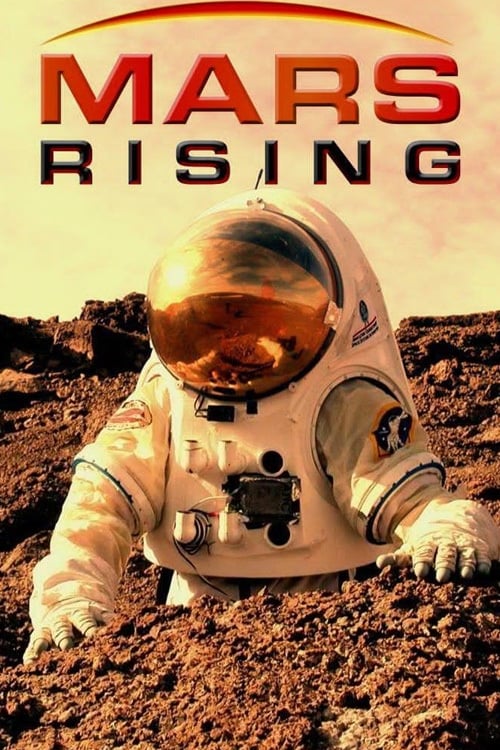
Mars Rising poster
Mars Rising
14th October 2007 2 hours Season 1 Episode 3

Preparing and protecting the human body in deep space may be a greater challenge than all the technological factors in planning a mission to Mars. Living together in a confined environment for up to three years, the six astronauts will become each others’ caregivers. They will face zero gravity with its debilitating effect on muscle and bone mass; solar storms; inescapable cosmic radiation – microscopic particles piercing the skin of the spacecraft and penetrating the bodies of those inside can cause brain damage and cancer. Retired U.S. astronaut and medical doctor Jerry Linenger describes the loss of 65 per cent of his muscle power. For Massachusetts Institute of Technology professor and retired astronaut Jeffrey Hoffman, cosmic radiation felt like “fireworks in my brain.” The intensity of cosmic rays experienced by astronauts on the Mars mission will be greater than that experienced by earlier astronauts and could damage their learning and memory – vital on the journey to Mars. Laurence Young, Apollo Program Professor of Aeronautics and Astronautics with MIT, is developing a method to produce artificial gravity on Earth. Astronauts must be prepared to combat the de-conditioning that goes with long duration weightlessness. Astronauts are training under the ocean and in virtual worlds. If there’s an accident on the long hazardous journey to Mars, the nearest ER is millions of kilometres away back on Earth. Even something as simple as a broken bone can be fatal. The astronauts will have to learn new medical and surgical skills to be able to operate in space. Space walks are always dangerous, whether they happen in Earth's orbit or in deep space. A solar storm would be lethal to an astronaut caught outside. A new protective spacesuit must be engineered. Solar storms, high energy particles packing millions of volts transmitted from the sun, can also play havoc with delicate instruments. A protective shield must be developed for the spacecraft as well. The astronauts chosen for the Mars Mission will be subject to DNA examination. In future, an astronaut’s genes may be altered to ensure he/she is the best possible candidate. The strongest – and the weakest – link of any successful mission to Mars remains the crew. Keeping the astronauts alive is the number one priority.

View season
Up next

Next Episode

View season
The Human Factor still
Season 1 · Episode 4

The Human Factor

The greatest test of the human mind will be the projected almost three-year manned mission to Mars and back. Mental breakdown, sexual tension, near-suicide and mutiny have already taken place on shorter Earth orbit and space travel missions. The Achilles’ heel of the Mars mission may be the human factor. Crew selection is perhaps the most critical of choices. At the start of space exploration, NASA selected military test pilots for missions – in the 1960s, one died per week. In the 1980s, scientists and schoolteachers were chosen to orbit Earth. Today, psychiatrists delve into the human psyche to discover the necessary attributes for a successful 21st century astronaut. The Russians have the most experience in long missions. They test candidates by keeping them isolated and awake for days of non-stop repetitive tasks to duplicate the numbing mindless routine of months of space travel. Life onboard will be crowded, noisy and dirty. There will be no water for showering and astronauts will drink their own purified urine. Noise, workload and disrupted circadian rhythms all cause sleep deprivation. Boring and repetitive food saps psychological and physical energy. What’s NASA cooking up for its crews? Sex in space is a possibility with a mixed crew in close quarters. NASA says that is OK and natural, but different nationalities and customs may give rise to misunderstanding and friction. Isolation and confinement can bring out strong emotions, even violence. Sedation and restraint could be necessary. Family problems on Earth could affect an astronaut’s ability to function. New methods of psychological assessment such as software that examines facial movements for signs of emotional disturbance are being tested. Six months of boredom while travelling through space will be followed by six minutes of an astronaut’s life’s most intense activity and terror during the dangerous descent through Mars’ atmosphere. Training a crew to cope with the psychological pressure of his/her imminent death is a major hurdle. Four personality types have been identified as the most perfect for a Mars mission: the driver, the analyst, the motivator and the relationship builder. Thus far, there has only been a 50 per cent success rate for landing un-manned spacecraft on Mars. Landing a manned craft is even more dangerous. The crew must face that grim reality.

Episode details

Details