Alexander Graham Bell
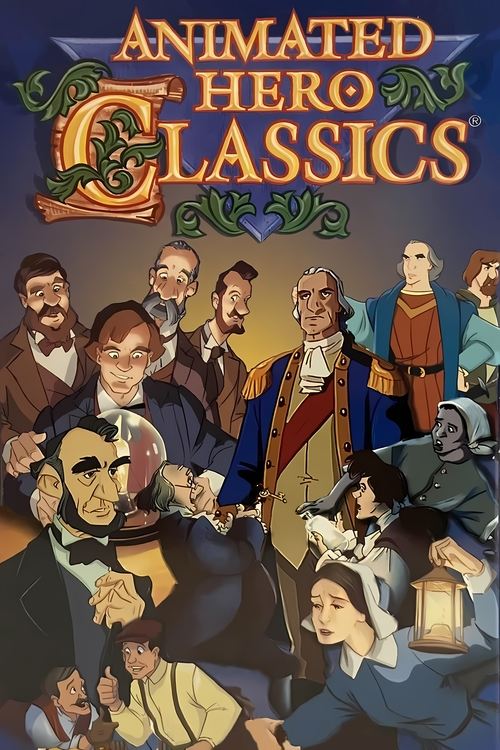
Animated Hero Classics poster
Animated Hero Classics
1st June 1995 Season 2 Episode 1

"You have a gem of a great idea, if you can perfect it," Joseph Henry of the Smithsonian Institute tells Alexander Graham Bell when he presents his theory for the invention of the telephone. When Thomas Watson and Bell begin their work for a multiple telegraph, Bell becomes convinced that he can send the complex sounds of human speech over a wire from its vibrations. Mr. Hubbard, the financier of the telegraph project, laughs when Bell first tells him about the idea for the project and says he will not finance it. Frustrated, Bell and Watson begin to work on the telephone while working on the telegraph without Hubbard knowing it. Bell is constantly inspired by his deaf students and longs to teach them to speak and communicate. His first dedication had always been to be a teacher of the deaf. But, as Bell becomes more and more engrossed in making the telephone invention work, he has little time to work with the students. As the inventors experience triumph in transmitting sound while playing with the telegraph, Bell is distressed to learn of a student, David, who is giving up and going home because he is frustrated with his inability to speak. He meets David at the train as he is leaving to convince him to stay and keep trying, but David refuses. Bell is greatly disappointed in his failure to help the boy and in the unsuccessful attempts to make the telephone work. Bell is frustrated and tired. As he rests on a park bench, his spirit is renewed when a mime communicates with him. He realizes he could never fail if he keeps trying. He and Watson continue working on the telephone with great enthusiasm. Finally, the telephone experimenting works as sound is transmitted through a tube. Watson clearly understands Bell when he says, "Watson, come here. I want you." As they share the joys of success, school begins again. Bell is rewarded by the return of David who has practiced all summer and knows he can succeed, too.


View season
Up next

Next Episode

View season
Beethoven still
Season 2 · Episode 2

Beethoven

Even as a young boy, Beethoven marched to the beat of a different drummer. Trained in the traditional music methods by his father, Beethoven was an accomplished pianist by the age of 12. But he yearned to try new sounds and persevered until audiences heard his music. By his early twenties, this persistent young man performed for Joseph Haydn, who compared him to the great Mozart. Sadly, Beethoven began to lose his hearing, but he threw himself even more deeply into his music, composing "Fur Elise," "Sonata Pathetique" and the dramatic "Fifth Symphony" years later, audience members heard what he could not and leapt to their feet in ecstatic appreciation for such passionate music. His creativity gave the world then, as it does today, music that stirs the soul. The video begins in 1827 with 30,000 people paying tribute to the great Beethoven in Vienna, Austria. Then the video switches to his life as a child. Beethoven was driven by his father without patience and love to practice playing the music of Mozart and Haydn on the piano; however, Beethoven preferred to improvise and play his own style of music. This enraged his father as it did many symphony patrons later in life. Beethoven was honored to be asked to move to Vienna and have Haydn as his instructor. After years of playing for royalty, Beethoven was frustrated that all the audiences wished only to hear music from Mozart and Haydn. So, Beethoven decided to move to the countryside where he could compose music as he wished. While living in the countryside, Beethoven noticed his hearing loss was getting more severe and feared going deaf. The world was going through a revolution. The America Colonies threw off the British Empire, and common people replaced the King and Queen of France. Beethoven believed that since the world was changing all around him that music should change also. Beethoven's performances were not embraced by the majority because of his visceral style and the war going on around him; however, Beethoven never gave up despite his despair and lack of encouragement. His courage to keep writing from the heart and his desire to play from the heart would eventually be accepted by the world. As a tribute to the soldiers, Beethoven was commissioned to write a symphony in honor of Wellington's victory over Napoleon. "The Wellington's Victory" was a favorite of the people of Vienna even though it was not one of Beethoven's favorites. Tragically, Beethoven's success could not be enjoyed. His health was fading quickly. In his last days, Beethoven finally wrote the symphony that touched his heart. The Ninth Symphony was his final work with the choral music put to Schiller's poem, "Ode to Joy." "Ode to Joy" spoke to the heart with words, and Beethoven's Ninth Symphony spoke to the heart with music. Sadly, Beethoven did not conduct his last piece of work because of his complete hearing loss. The applause was not heard by Beethoven; but the sight of the audience standing and continually applauding was Beethoven's acknowledgment of the appreciation felt by the Vienna people and the world.

Episode details

Details