
Serge Gainsbourg's Filmography



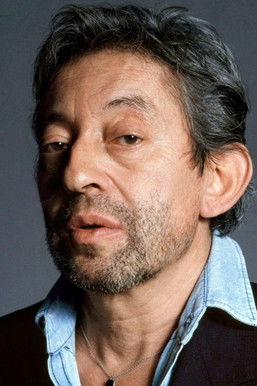
Born: 2nd of April 1928
Died: 2nd of March 1991 (aged 62)
Biography:
Serge Gainsbourg (born Lucien Ginsburg; 2 April 1928 – 2 March 1991) was a French singer-songwriter, actor, composer, and director. Regarded as one of the most important figures in French pop, he was renowned for often provocative releases which caused uproar in France, dividing public opinion. His artistic output ranged from his early work in jazz, chanson, and yé-yé to later efforts in rock, zouk, funk, reggae, and electronica. Gainsbourg's varied musical style and individuality make him difficult to categorise, although his legacy has been firmly established and he is often regarded as one of the world's most influential popular musicians.
Gainsbourg wrote over 550 songs, which have been covered more than 1,000 times by diverse artists. His lyrical works incorporated wordplay, with humorous, bizarre, provocative, sexual, satirical or subversive overtones. Since his death from a second heart attack in 1991, Gainsbourg's music has reached legendary stature in France. While controversial in his lifetime, he has become one of France's best-loved public figures. He has also gained a cult following across the world with chart success in the United Kingdom and Belgium with "Je t'aime... moi non plus" and "Bonnie and Clyde", respectively.
Serge Gainsbourg was born in Paris on 2 April 1928, in the maternity ward of the Hôtel-Dieu de Paris on the Île de la Cité. He was the son of Russian Jewish immigrants, Joseph and Olga Ginsburg.
Born Brucha Goda Besman (nicknamed Olia/Olga) in Feodosiya in 1894, Serge's mother was a mezzo-soprano singer. Serge's father Joseph was born in Constantinople in the Ottoman Empire of Ukrainian Jewish heritage in 1896. Originally interested in painting, he entered the Petrograd Conservatory and then the Moscow Conservatory to study music, becoming a classically trained pianist. He came to Crimea, where he met and married Olga in 1918. The couple fled Odessa for Paris via Georgia and then Istanbul in the years following the Russian Revolution. The couple arrived in Marseille in 1921, settling in Paris near Olga's brother, who worked for the Louis Dreyfus Bank. Joseph became a piano performer at bars, casinos, and cabarets, while Olga sang at the Conservatoire Rachmaninoff.
Serge and his twin sister Liliane had an elder brother Marcel, born in 1922, who died at sixteen months of pneumonia. They also had an older sister Jacqueline, born in 1926.
The family lived in the working-class districts of Paris, first at 35 Rue de la Chine in the 20th arrondissement, and then at 11 Rue Chaptal in the 9th arrondissement. They obtained French nationality in 1932. Joseph taught Serge and Liliane to play the piano. At age 12, Serge enrolled at the École Normale de Musique de Paris.
Gainsbourg's childhood was profoundly affected by the occupation of France by Germany during World War II. The identifying yellow star that Jews were required to wear haunted Gainsbourg; in later years he was able to transmute this memory into creative inspiration. Early in the summer of 1941, the family temporarily sought refuge in the commune of Courgenard in the Sarthe department, at a place called "La Bassetière," with Baptiste and Irma Dumur. ...
Source: Article "Serge Gainsbourg" from Wikipedia in English, licensed under CC-BY-SA.